

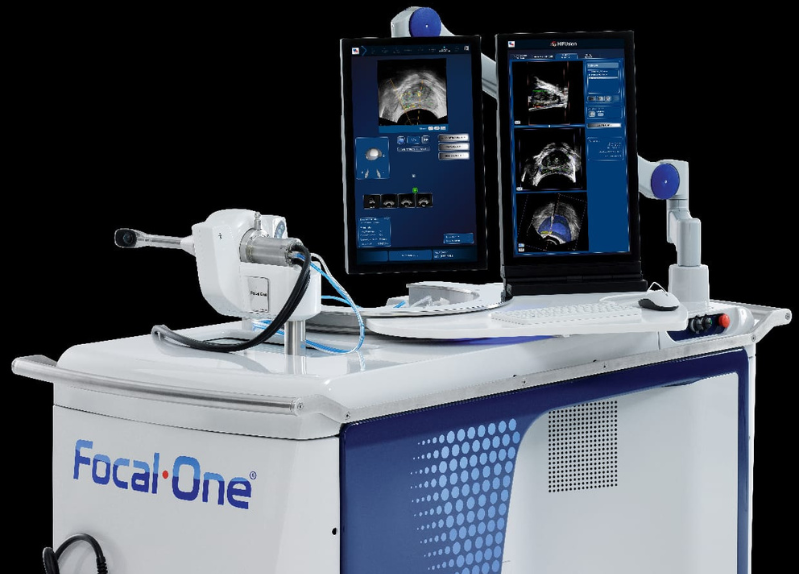
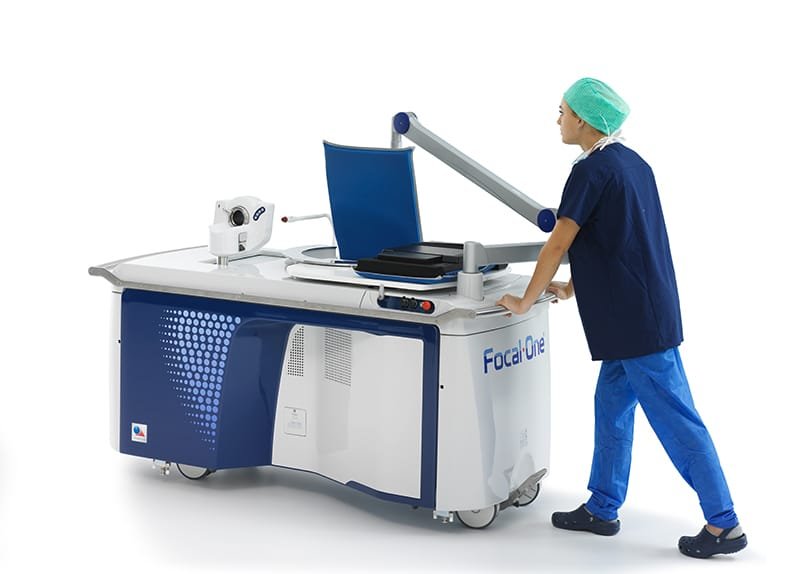

Focal One Robotic HIFU

Offering a Non-Invasive Option for Prostate Cancer

WHAT IS HIGH-INTENSITY FOCUSED ULTRASOUND (HIFU)?

HIFU is a non-invasive, nonsurgical option offered to certain prostate cancer patients.

This technology ablates prostate tissue by focusing high-intensity ultrasound waves on the affected area, causing localized heating that destroys the cells in the gland without damaging the healthy surrounding tissue. Focused ultrasound works in the same way as rays of sunlight that pass through a magnifying glass and are concentrated at a single point, equally causing a significant temperature to rise around the focal point.

How Does HIFU Work?

HIFU technology targets prostate tissue by focusing high-intensity focused ultrasound waves on the affected area. This results in a localized effect that destroys only the targeted cells without damaging healthy surrounding tissue and critical structures.

Focused ultrasound is a proven and safe medical technology with over 50,000 patients treated worldwide over 30 years.

Patients can expect to return home the same day and can quickly resume normal activities.

WHAT ARE THE ADVANTAGES OF HIEU TREATMENTS?

Non-Invasive Procedure

It is a non-invasive procedure with no surgery, no cutting, and no radiation.

Minimal Side Effects

There is a low risk of side effects such as incontinence and erectile dysfunction.

Quality of Life

Quality of life is preserved. Patients will be back to their day-to-day, regular activities shortly after the procedure.

Outpatient Procedure

It is performed in an outpatient setting, meaning patients will go home the same day.

WHAT HAPPENS AFTER YOUR HIFU PROCEDURE?

At the end of the procedure, a temporary urinary catheter will be placed in order to limit the risk of urinary retention due to the temporary swelling. You will be discharged and can return home after the end of the procedure. The catheter will be removed at the first follow-up visit a few days later (5-7 days). Typical follow-up will include PSA testing at three months, six months, and one year, as well as an MRI image. This follow-up can be performed by the treating urologist, or if you travelled from a remote location, your local urologist.

Scroll to Top
Call Now Button